Product Description
1. OTDR: 1310/1550nm, 22/20 dB, 0-60 km
2. Optical Power Meter:-70+10 dbm or -50+26 dbm
3. Visual Fault Locator : >=10 mw
4. Optical Light Source : 1310/1550 nm, >-5 dBm
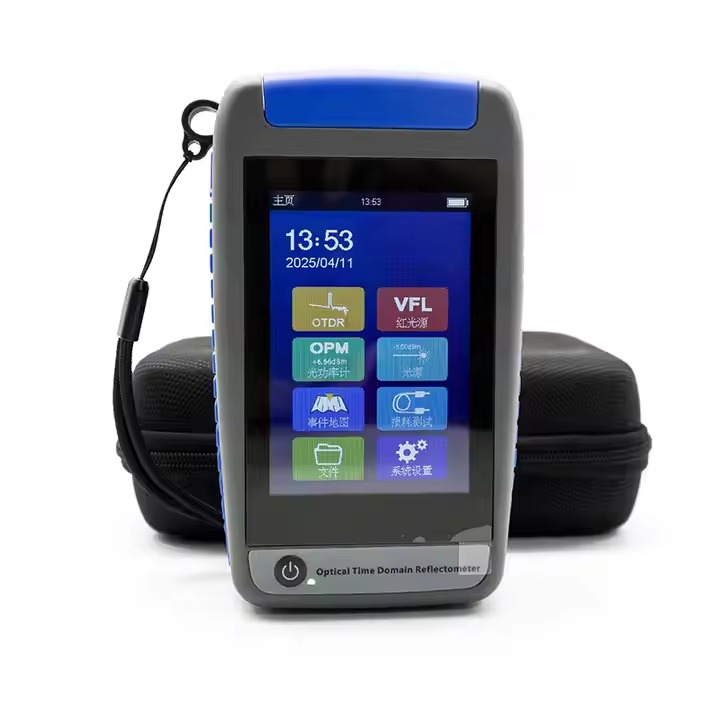
WPT 61 Smart handy OTDR is portable fiber fault locator, it is quickly to detect fault location
and type of optical fiber using OTDR element and stronger software analysis tool.
Comprehensive Fault Detection and AnalysisEquipped with advanced auto test and analysis features, the SMART HANDY OTDR detects and pinpoints faults with high accuracy across various fiber networks. Its wide pulse width range and dynamic range ensure reliable measurements for both long- and short-distance applications, making it a valuable tool for telecom and FTTx specialists.
Ergonomic Design, Built for the FieldDesigned for portability, the OTDR boasts a lightweight (approx. 480g), ergonomically shaped ABS body that fits comfortably in hand, complemented by a matte finish for enhanced grip. Its high-impact resistance and adaptable temperature range (-10C to 50C operating) allow uninterrupted use in demanding environments.
Flexible Storage and ConnectivityWith internal memory capable of storing up to 1,000 test results and interchangeable SC/FC optical ports, users can efficiently document and transfer data via USB. The included PC analysis software supports in-depth result review and reporting, streamlining post-test processing for network maintenance teams.
FAQ's of SMART HANDY OTDR:
Q: How does the SMART HANDY OTDR assist in locating faults within optical fiber networks?
A: The SMART HANDY OTDR utilizes precise laser pulses at 1310 nm and 1550 nm to detect and analyze faults within optical fibers. Its auto test and analysis features quickly identify event locations and measure attenuation, making fault location accurate and efficient for telecom and FTTx maintenance.
Q: What types of environments is the SMART HANDY OTDR suitable for?
A: This OTDR is designed for both field and laboratory environments. Its robust ABS construction and high impact resistance, along with an operating temperature range of -10C to +50C, ensure reliable performance across various settings, including telecom sites and CATV installations.
Q: When should I use the different wavelengths (1310 nm and 1550 nm) provided by the OTDR?
A: Use the 1310 nm wavelength for testing short-haul links or for initial installation checks, as it is commonly used for detecting microbends. The 1550 nm wavelength is preferable for longer-distance measurements due to lower attenuation, making it suitable for identifying issues over extended fiber spans.
Q: Where can I store and review test results from the SMART HANDY OTDR?
A: Test results are stored in the device's internal memory, accommodating up to 1,000 test results. Data can be easily transferred to a PC using the USB interface, where users can review, analyze, and organize tests using the included PC analysis software.
Q: What advantages does the LCD touchscreen display offer for OTDR operation?
A: The high-resolution 4-inch color LCD touchscreen simplifies device operation, providing clear visualization of test traces and results, intuitive menu navigation, and real-time parameter adjustments, thus enhancing overall user experience and efficiency.
Q: How long can the OTDR operate on battery, and what are the power options?
A: The device supports up to 10 hours of continuous operation on its rechargeable lithium battery. For extended use or stationary testing, it can also be powered via the included AC adapter (100-240V), ensuring flexibility in various working conditions.
Q: What benefits does the SMART HANDY OTDR offer over traditional OTDR units?
A: This device combines portability and precision, providing high-performance measurements in a compact, easy-to-carry design. It supports multi-language operation, features user-friendly touchscreen controls, quick data management, and durable construction, making it ideal for on-site network maintenance professionals.




 Send Inquiry



 Send Inquiry


